



Call us: +44 (0) 1202 868000


Proximity Warning Systems for Ports & Terminals
Proximity warning systems for ports protect people and assets at the people-plant interface.
PORTS & TERMINALS
Proximity warning systems for ports and terminals.
Help operators and pedestrians recognise vehicle proximity risks across cargo yards, transit sheds and quayside routes.
ZoneSafe provides pedestrian detection, vehicle warnings, and activated signage configured around your terminal, your vehicles, and how people work. Explore RFID proximity warning and detection, AI cameras or a combined approach for reach stackers, forklifts, cargo-handling plant and restricted-view crossings.
For port authorities, terminal operators, stevedoring businesses and cargo handlers managing vehicle movements around terminal staff, visiting hauliers, contractors and ship crews.


From Avonwood Developments, a UK manufacturer / Port Applications: APM Terminals, Peru – Qube, Australia – SAAM Ports, Chile
“We made a lot of efforts to avoid accidents through instruction and training with some success, but we were looking for technology that could help. We’re the first container terminal to go live with these sorts of RFID safety measures. It allows you to avoid serious injuries and fatalities.”
Henrik Kristensen – Chief Executive, APM Terminals, Callao
Watch Video Case Study
PORTS & TERMINALS OPERATING SITUATIONS
Where do cargo movements meet people?
Review cargo yards, transit sheds and quayside routes where vehicle movements meet terminal staff, visiting hauliers, contractors and ship crews.
Container handling and restricted views
Containers, vehicle structures and changing stack layouts can restrict views around reach stackers and container handlers. Review loaded and unloaded movements, turns and the pedestrian tasks near the working area.
Transit sheds and blind exits
Forklifts and cargo-handling vehicles can emerge from sheds into routes used by people and other vehicles. Assess doorway sightlines, lighting changes and whether a vehicle warning, fixed sign or access arrangement is needed.
Bulk cargo and mixed vehicle movements
Loading shovels, forklifts and other plant may share cargo areas with staff inspecting or handling goods. Review the actual cargo, attachments, routes and permitted pedestrian access.
Quayside and ship-to-shore access
Ship crews, contractors and terminal teams may cross cargo routes between access points and vessels. Consider gangway routes, inductions, language needs and who should receive a warning.
Visiting hauliers and changing operations
Arrival, load checking and dispatch can bring visiting drivers into unfamiliar areas. Review driver waiting arrangements and access instructions as cargo schedules, shifts and work zones change.
DETECTION AND WARNING OPTIONS – PROXIMITY WARNING SYSTEMS FOR PORTS & TERMINALS
Choose detection around your port and terminal operations.

RFID Proximity Warning & Detection
Pedestrian detection uses RFID tags without needing direct line of sight to the tag. The configured system warns the operator and tagged pedestrian. Assess actual cargo stacks, steel structures and routes, and plan tag issue, return and checks.
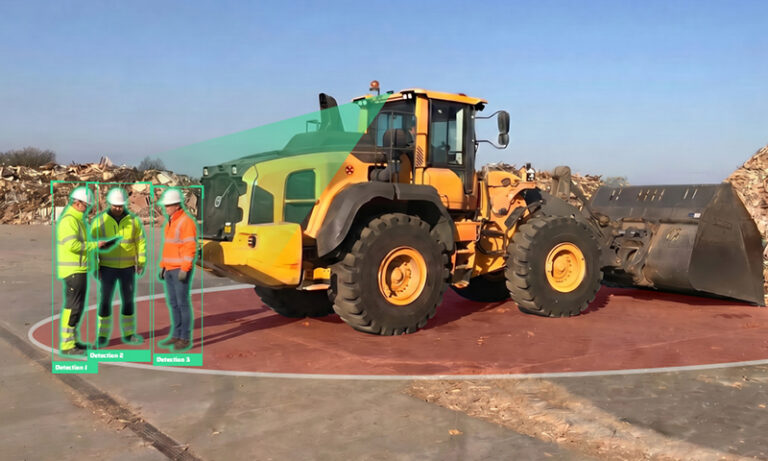
Combined AI & RFID proximity detection
Combine HFR camera detection of visible, untagged people with RFID detection of tagged workers where the view is obstructed. Evaluate both detection paths with representative cargo and agree the operator warning arrangement.
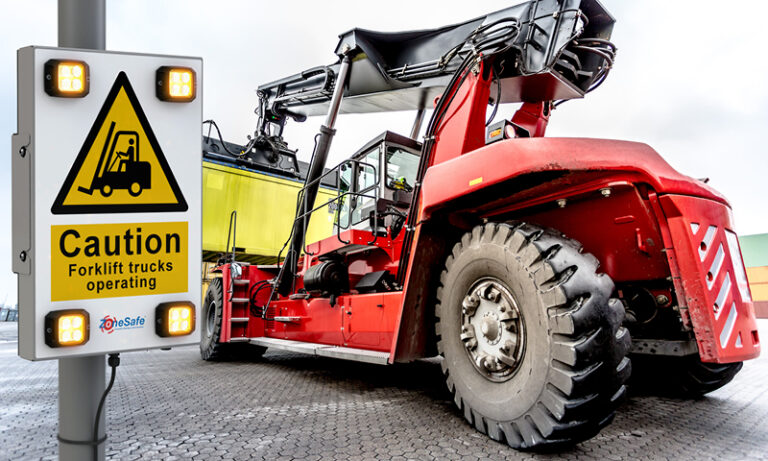
Vehicle-activated
Signage
Signage
Trigger a warning when an equipped vehicle approaches a crossing, doorway or fixed access point. Position the sign for the people using that route. Discuss access control where appropriate to support agreed site procedures.

Site Access Control (doors, gates & barriers)
By restricting site access to only those with a ZoneSafe tag, the system reduces the risk of accidents. Tags are required to open gates or barriers to restricted areas, and the user will be detected and warned if they get too close to a moving vehicle.
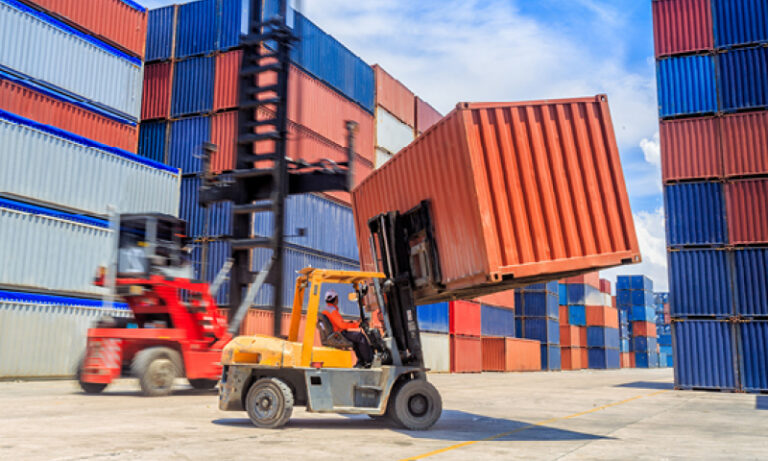
Vehicle-to-Vehicle Warnings
Warn operators when another equipped vehicle enters the configured detection zone. Consider shed approaches, cargo-yard junctions and mixed-fleet routes. Confirm compatibility and which vehicles require equipment, including hired units.

MyZoneSafe
Data Management
Data Management
MyZoneSafe is our cloud-based platform that records and displays event data (such as near-miss occurrences) to inform health and safety managers of potential hazards and collision hotspots.
PROXIMITY WARNING SYSTEMS FOR PORTS & TERMINALS
See how port and terminal operations use ZoneSafe.
UK examples of site traffic management and loading-shovel pedestrian warnings.
These examples describe individual implementations. Follow each case study for its application and context.

SAAM offers cargo support services in Chile and South America, employing over 7000 people with an active presence in over 10 countries.

With the growth of global trade, Callao port and terminal operators are handling an increasing volume of cargo and shipping containers.
Some of the clients who have purchased proximity warning systems for ports and terminals:



What vehicles can ZoneSafe be fitted to?
Our proximity warning systems for aggregates and quarries integrate with all cargo-moving vehicles and mixed fleets. Each vehicle possesses its own blind spots and collision risks. ZoneSafe significantly increases awareness for both operators and groundworkers around each vehicle.

Forklifts
Forklifts have many different blind spots thanks to the loads they carry, distorted view from the cab, and the shape of the vehicle. Our system provides the vital warning needed to prevent collisions in these risky situations.

Container Handlers & Reach Stackers
Reach stackers are used in port areas to maneuver large containers, which can obstruct the driver's view and increase the risk of collisions. ZoneSafe provides a critical layer of safety by detecting pedestrians and assets that a driver cannot see.
FOR THE PEOPLE MAKING THE DECISION
Get the answers your team needs.
Terminal / port operations
Identify cargo tasks, routes and shift conditions that create vehicle-person interactions. Plan installation and handover around vessel and terminal schedules.
EHS / SHEQ Managers
Define the interaction, existing controls, warning response and evaluation criteria. Include contractors, visiting drivers, ship crews and portside manouvres.
Fleet / engineering
Review reach stackers, forklifts and cargo plant, attachments, mounting, power, exposure, cleaning and compatibility across the fleet.
Stevedoring / cargo supervisors
Review shed exits, load handling and people on foot near cargo movements. Agree how operators and ground teams respond to warnings.
Access / transport coordination
Plan haulier arrival, driver waiting areas, inductions, crew access and tag issue or return where required.
Procurement / port leadership
Compare equipment, installation, training and support scope. Define the evidence and responsibilities needed before a multi-terminal rollout.
FROM OPERATING PROBLEM TO AGREED SCOPE
Plan around terminal and vessel schedules.
Review representative working conditions and the practical requirements for installation and ownership.
1. Describe the cargo operation
Share cargo types, vehicle and attachment details, routes, pedestrian tasks and existing controls. Include visiting drivers and ship-to-shore access.
2. Evaluate a representative area
Agree scenarios covering loaded and unloaded vehicles, relevant approaches, stacks, shed lighting and shift conditions. Review detection, warning response and tag routines.
3. Plan installation & ownership
Discuss vehicle availability, vessel schedules, commissioning, induction, cleaning and checks. Confirm scope and ownership before expanding to other areas or terminals.
BEFORE YOU MAKE ANY DECISIONS
Practical questions regarding proximity warning systems for ports & terminals.
Can it detect someone hidden by containers or cargo?
Can it be fitted to reach stackers and mixed terminal fleets?
Do visiting drivers, contractors and ship crews need tags?
Will vehicle-to-vehicle warnings detect every visiting lorry?
Can signs warn people at shed doors and crossings?
Is it suitable for salt exposure, rain and night operations?
Does it stop vehicles, control cranes or protect the quay edge?
What do you need to scope a quotation or trial?
Does it replace existing controls?
DISCUSS YOUR PORTS & QUARRIES OPERATIONS
Tell us what you need to address.
Has a near miss, audit finding, change in layout or fleet expansion prompted a review? Tell us why you are looking, what needs covering and how soon you need to act. You don’t need to choose a safety technology before contacting us. We can suggest the right technology and safety system to suit your requirements.

Help your employees
to feel safe at work

Protect your
employer reputation

Improve your
safety culture
Other projects we’ve delivered

Peterson UK,
Logistics and Transport
Logistics and Transport
Peterson UK Ltd, a provider of critical logistics solutions, dramatically decreased the number of activations over time.

Gray Forklift Services,
Forklift Supplier
Forklift Supplier
Gray Forklift Services Ltd selected ZoneSafe to manage their fleet of trucks and health and safety needs.

Liberty Steel,
Steel Manufacturer
Steel Manufacturer
Liberty Steel implemented a vehicle safety and asset protection system to stop cranes from colliding.

Massey Wilcox,
Haulage & Distribution
Haulage & Distribution
Massey Wilcox, hauliers were on the lookout for a safety system that would help to improve overall safety on site.
See how ZoneSafe can provide a solution for you Get in touch