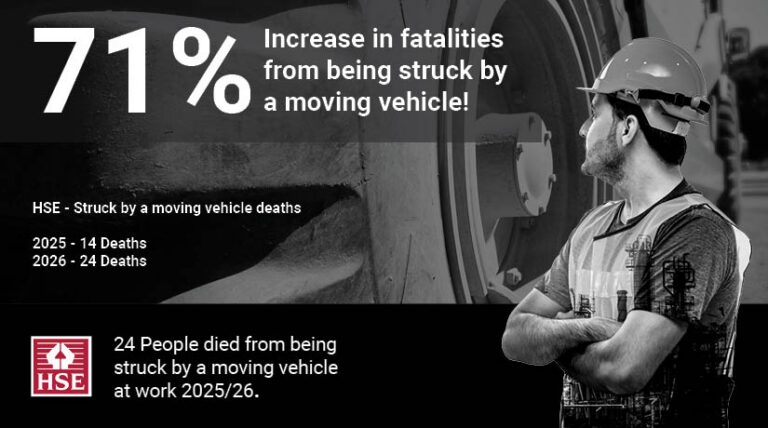


Recent Health and Safety Executive (HSE) data highlights an urgent need to improve worksite safety, with 24 worker fatalities from being struck by a moving vehicle in 2025/26. This figure marks a 71% increase from the 14 deaths reported in the previous year. Significant issues remain, and more must be done to keep pedestrian workers safe around moving plant machinery, heavy vehicles, and MHE.
What is a multi-layered approach to worksite safety?
What are the limitations of a single line of defence in worksite safety?
-
- Driver distractions: Blind spots caused by obscured vehicle loads, stacked products and site layout.
- Environmental noise: Heavy machinery drowning out singular audible alarms.
- Worker fatigue: Reduced situational awareness during high-stress shifts.
How do you build a multi-layered safety ecosystem?
1. The Foundation Layer: Proximity Warning Systems
-
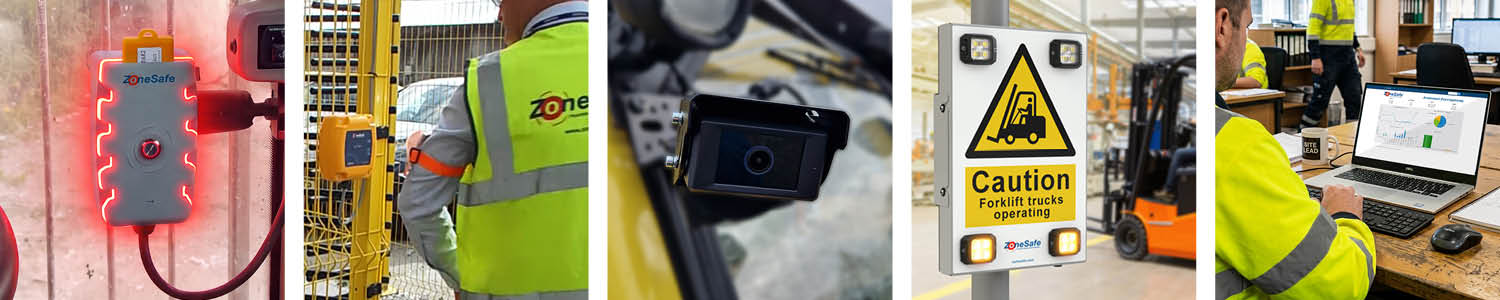
- Core technology: Employs precise RFID technology to create an invisible, 360-degree detection zone around moving plant machinery such as forklift trucks, shovel loaders and excavators.
- Driver alert: Triggers instant visual and audible warnings from the in-cab control unit if a pedestrian enters the vehicle’s detection zone.
- Pedestrian protection: Vibration alerts from the worker’s smart RFID tag instantly increase situational awareness when vehicles approach.
2. Layer Two: AI Cameras for Site-Wide Person Detection
-
- Blind spot elimination: Uses human form recognition (HFR) technology to identify people instantly. Cameras are also strategically placed to eliminate vehicle blind spots.
- Tagless worker protection: Automatically detects visiting drivers, subcontractors, or visitors who are not wearing an RFID tag.
- Operational hybrid: Bridges the gap between structured staff routines and unpredictable external site variables.
3. Layer Three: Smart Access Control
-
- Physical infrastructure integration: Connects wearable RFID tags to physical security gates, turnstiles, doors and barriers.
- Hazard restriction: Prevents pedestrians from entering active loading bays or high-traffic zones without authorisation. Only people wearing a tag can enter the danger zone, making them “detectable” to the proximity warning safety system.
- Interlocked locking: Automatically locks pedestrian access gates as soon as a vehicle enters a specific zone.
4. Layer Four: Vehicle-Activated Signs
-
- Blind corner alerts: Illuminates high-visibility LED signs when a heavy vehicle approaches a hidden doorway, blind corner or intersection.
- Behaviour alteration: Broadcasts immediate visual and audible warnings to naturally alter pedestrian behaviour before a vehicle arrives.
5. Layer Five: Holistic Intelligence with MyZoneSafe
-
- Telemetry collection: Captures every proximity alert, zone breach, and access event into a cloud-based data management platform.
- Hotspot identification: Maps near-miss trends across the site to address safety breaches before accidents occur.
- Data-driven training: Targets behavioural training for specific teams based on objective telemetry, not guesswork.
- Data-driven improvements: Site layout and/or procedure improvements derived from data.
How can layered worksite safety measures help reduce HSE fines?
| Safety Approach | Regulatory Impact | Business Outcome |
|---|---|---|
| Minimum Compliance | High risk of failed “reasonable steps” evaluations by inspectors. | Severe, revenue-shattering HSE fines and operational delays. |
| Layered Tech Ecosystem | Proves proactive engineering of risk out of the environment. | Influences regulatory outcomes and reduces fine severity. |
Transition to a Proactive Safety Culture With ZoneSafe
Worksite safety shouldn’t restrict operations—it should enable smooth, confident productivity. Scalable safety technology means investing in a connected ecosystem that adapts to your unique worksite challenges. With ZoneSafe, you can install layers of safety all at once or over time. Either way, transitioning to a proactive safety culture will improve situational awareness and significantly reduce accident risk, strengthen your company’s safety culture, and protect its reputation.
Ready to evolve your worksite safety from a single line of defence into a multi-layered worksite safety shield? Contact the ZoneSafe team today to tailor a connected safety solution for your worksite.