



Call us: +44 (0) 1202 868000


Case Study: J. Dickinson & Sons – Active Safety at MRF
Project at a Glance
J. Dickinson & Sons required an active safety solution to mitigate high-risk vehicle-pedestrian interactions across their 17-acre site.
-
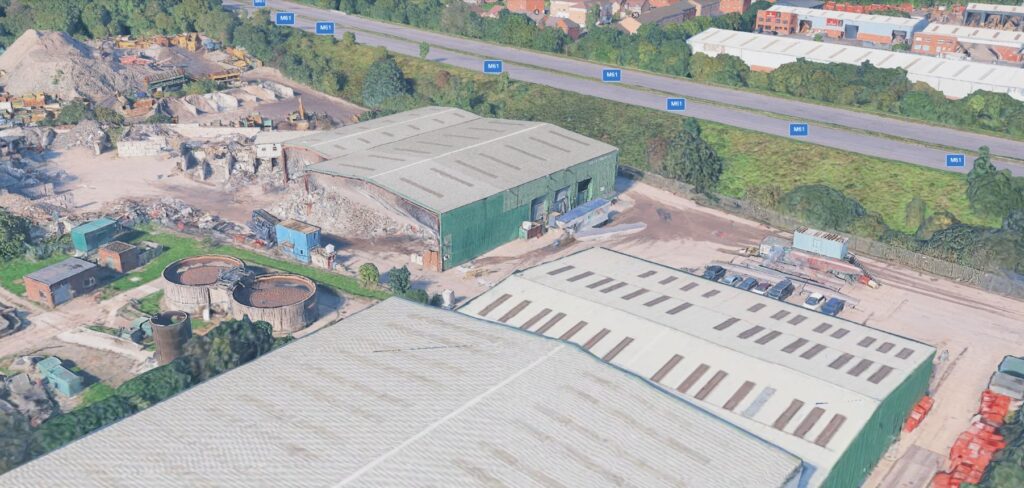
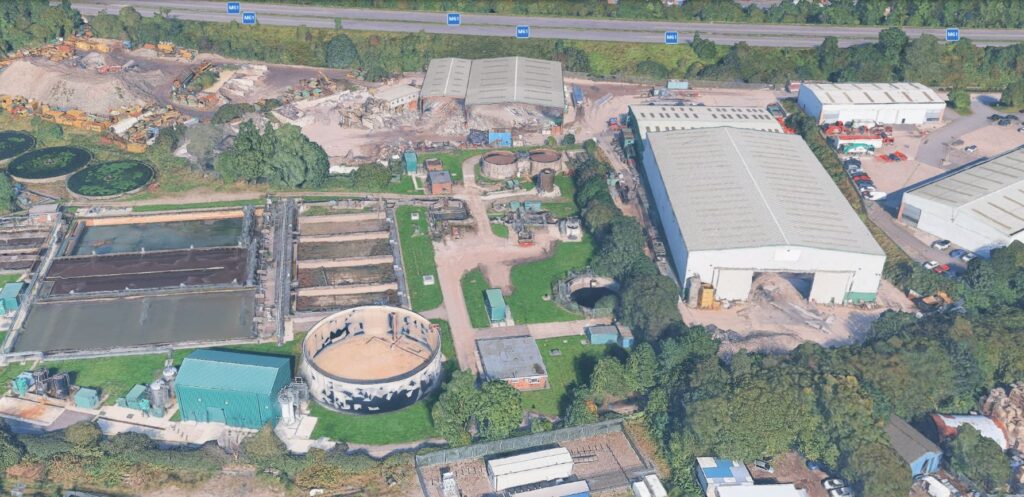
 17-acre Materials Recycling Facility (MRF) and Waste Transfer Station.
-
High-frequency vehicle movement intersecting with Vehicle Marshals and third-party drivers.
-
Proximity Warning System with dual and single antenna configurations using RFID technology.
-
100 Pedestrian Tags and 16 Operator Tags.

Scale of Operation and Safety
J. Dickinson & Sons operates a 17-acre state-of-the-art recycling village in Horwich. Having evolved into a large-scale industrial operation, the site now manages a massive modern fleet handling skips, aggregates, and commercial waste.
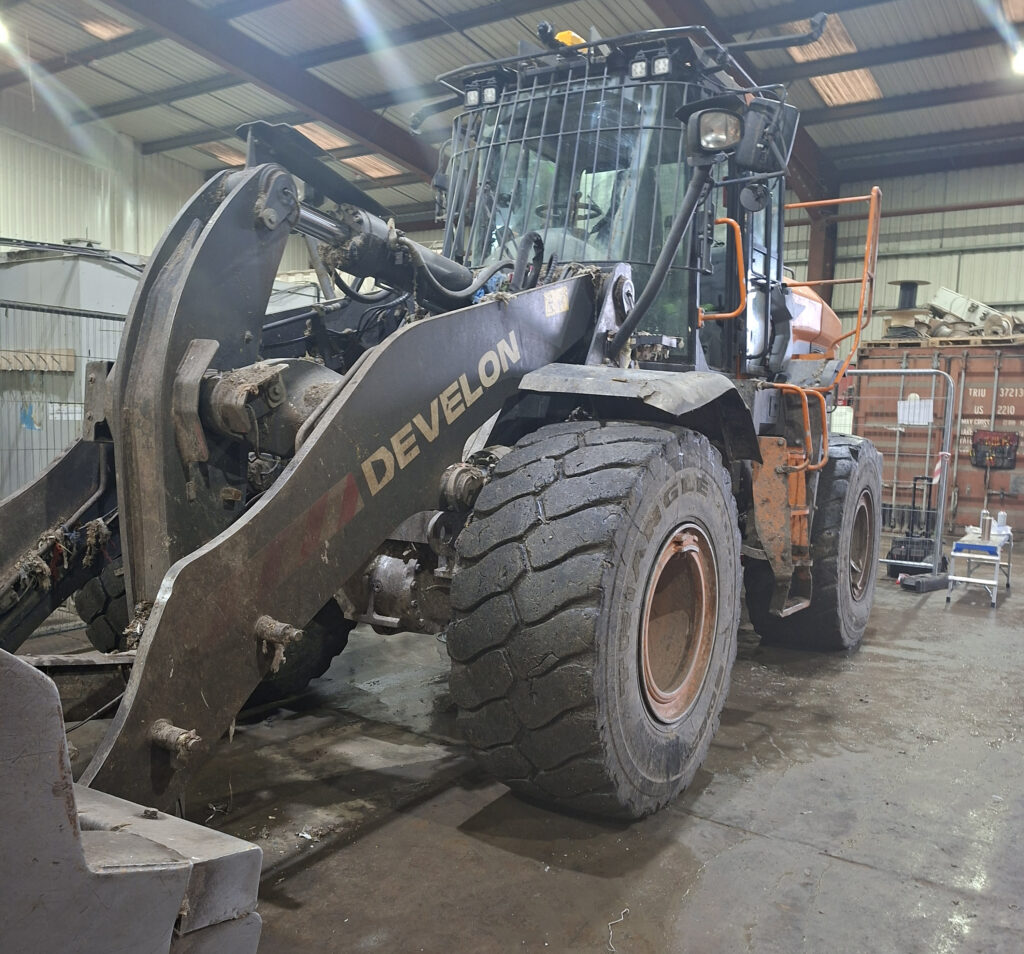
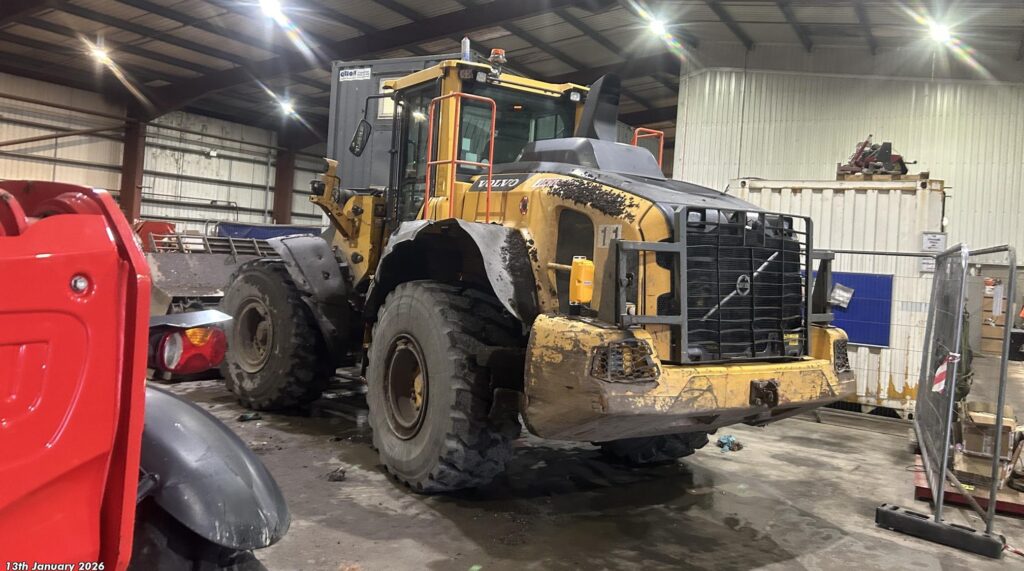
This volume is powered by heavy Develon and Volvo equipment, operating in an environment where intense business peaks require the highest level of technical safety.
Operating Environment: The Banksman at Risk
The Horwich site is an outward-facing Materials Recycling Facility (MRF) where J. Dickinson drivers, yard operatives, third-party transport contractors, and the public work alongside each other in a busy, high-pressure yard. Pedestrians, focused on unloading or sorting, navigate around the heavy mobile plant.
The Banksman is the primary person at risk in this landscape. Tasked with managing traffic flow and mobile plant visibility, they often work in the direct path of Loading Shovels moving material between external stockpiles and internal storage bays. While designated pedestrian walkways run throughout the yard, the site’s fast pace means operatives and mobile plant still often intersect.
Piles of aggregates and skips block awareness, while processing machinery drowns out the sound of approaching vehicles. Following several near misses that narrowly avoided major incident, it became clear that relying on perception and marked walkways alone was not enough to guarantee safety.
Indoor Challenges: Tipping Bays
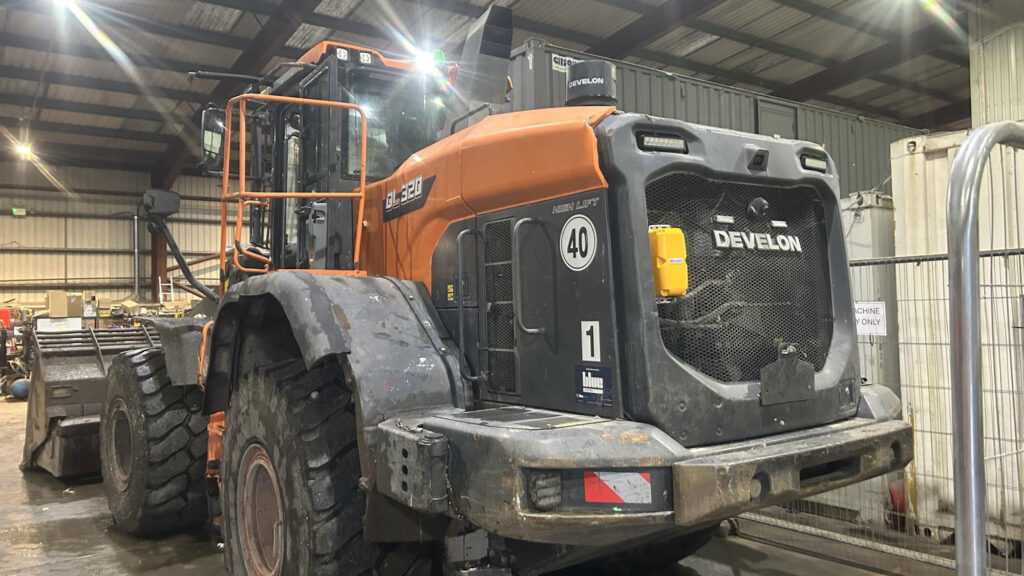
Inside the warehouse, the environment shifts to confined tipping halls and bays. Loading Shovels are the primary concern here, moving in and out of tight quarters at speed. Loader arms and masts create permanent obstructions for the operator, making it impossible to see anyone in their immediate path. While 360 Excavators are also present, they remain mostly static, working from the front of waste piles with limited travel.
These massive piles of waste create a constantly shifting landscape of blind spots. Pedestrians work just metres from the moving plant, often hidden behind the very material they are processing. Dim, shaded sheds further restrict space, providing no clear path of retreat. When a Loading Shovel reverses or turns into a bay, the operator is effectively blind to anyone standing nearby or emerging from behind a pile.
Targeted Technical Implementation
Ensuring personnel safety near mobile equipment was a top priority for J. Dickinson & Sons, prompting the search for an advanced proximity warning solution. After a careful evaluation, ZoneSafe was chosen for its modular compatibility with any fleet vehicle. A site survey was conducted to tailor the implementation, and the hardware was configured to address specific blind spots of the heavy plant.
ZoneSafe RFID technology has a clear advantage over cameras and standard sensors, as it detects through obstructions. In a Materials Recovery Facility (MRF), where waste piles and concrete bays often block sightlines, the system provides reliable detection and two-way alerts, even when a pedestrian is hidden behind a skip or waste pile.
Detection zones are adjustable from 3m to 11m, enabling calibration to each vehicle’s specific speed, size, and stopping distance.
-
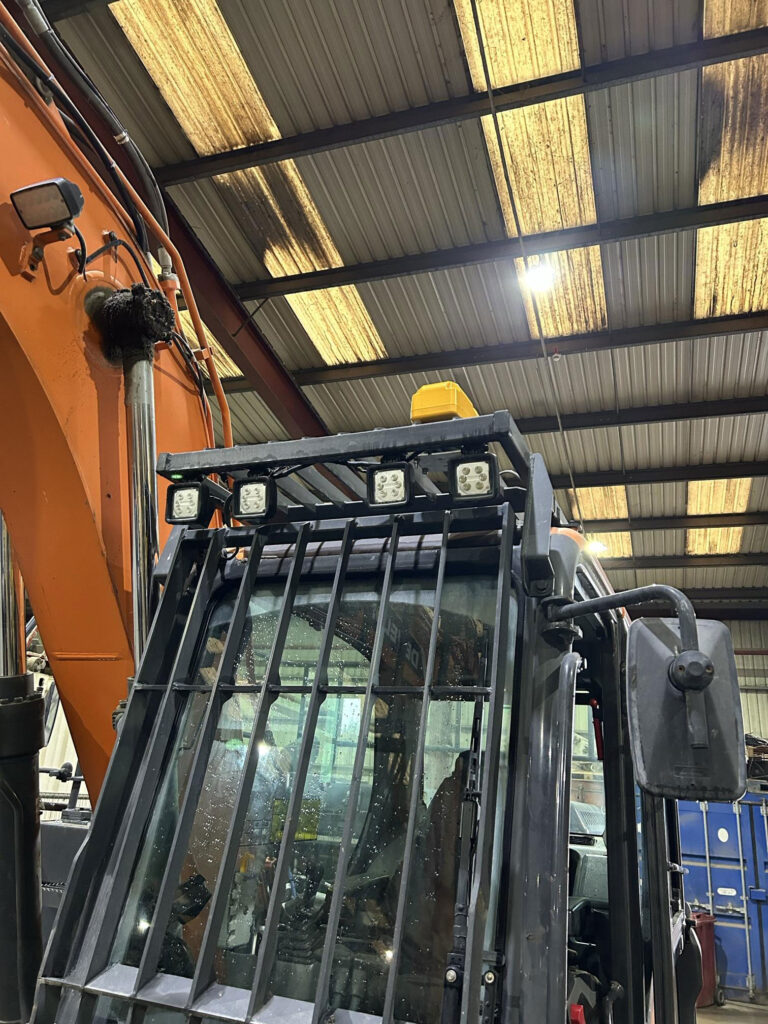
3x Develon DL320 & 1x Volvo E220EL Loading Shovels: Dual antennas at front and rear give full coverage.
-
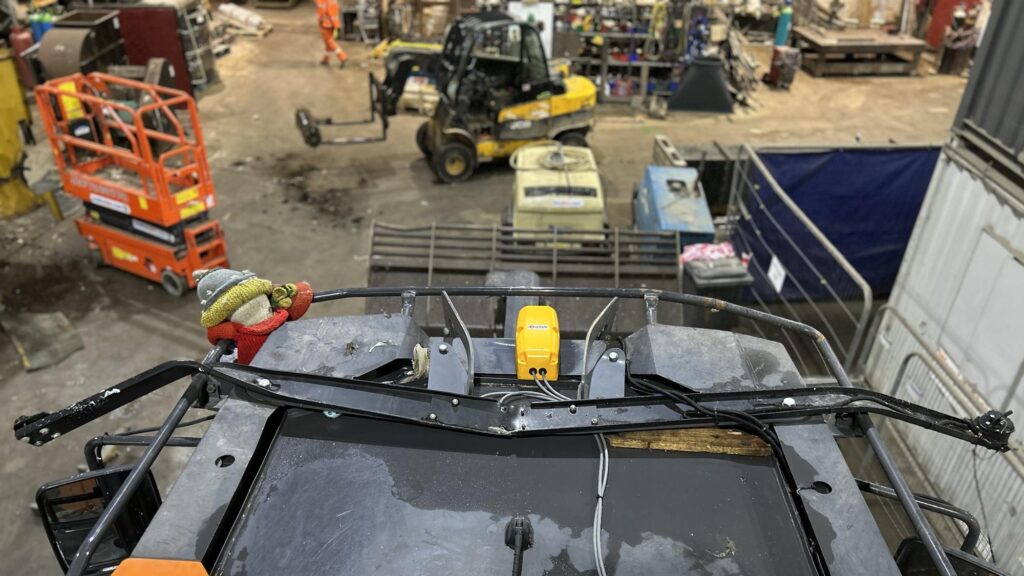
2x Develon DX140 Excavators: A single roof antenna covers the 360-degree operating area.
Site Protocol: From Weighbridge to Yard
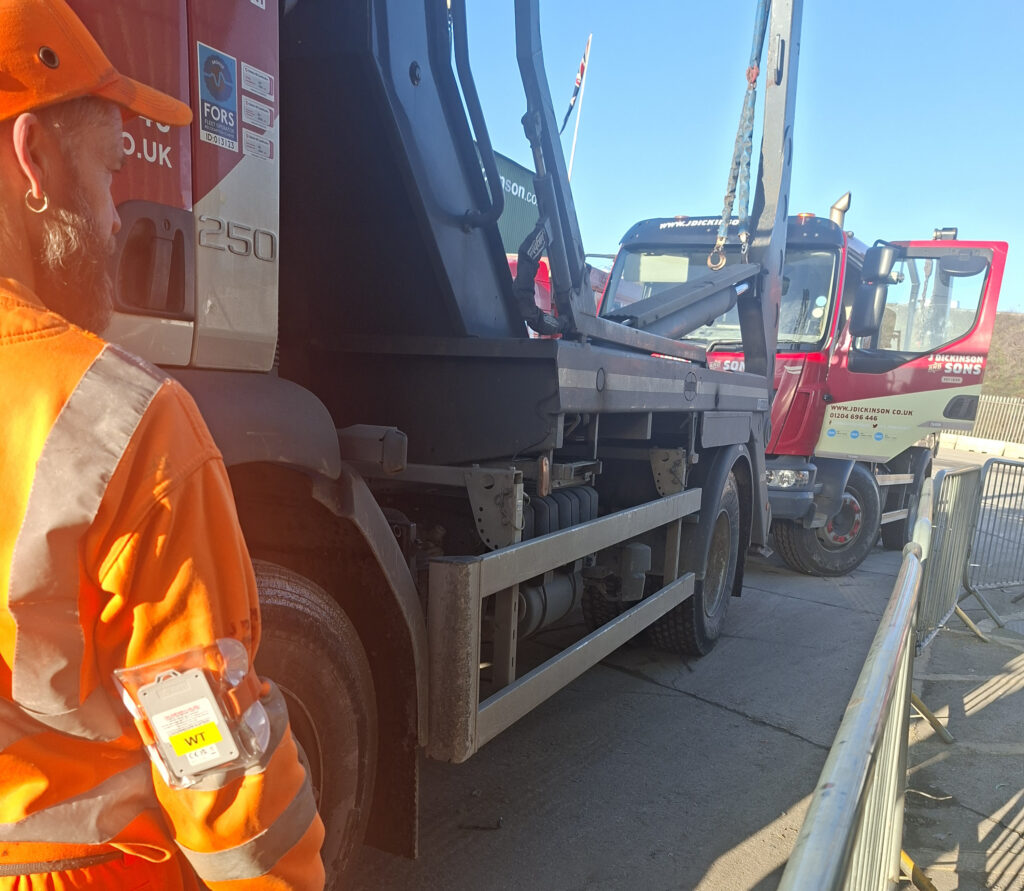
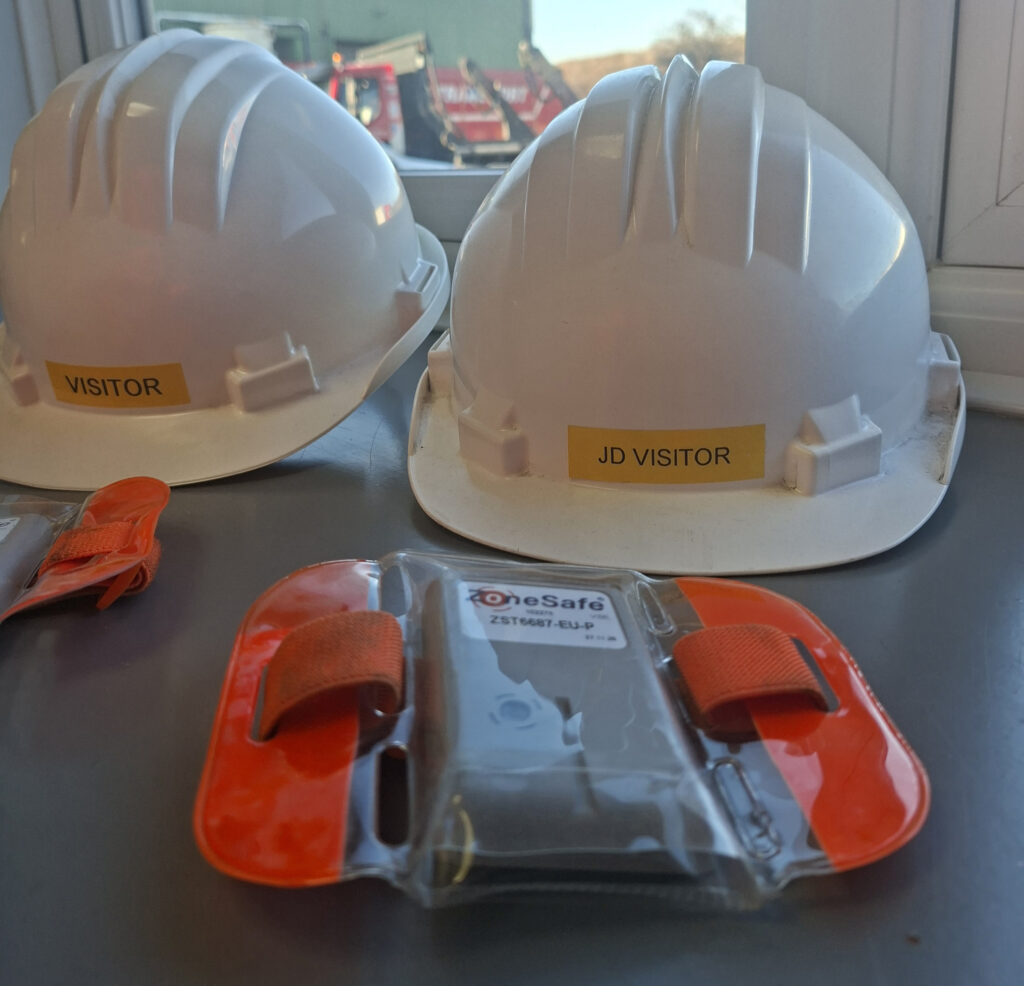
Safety begins at the site entrance. The Weighbridge Hut is the main checkpoint for issuing and acknowledging RFID tags. Designed and manufactured in the UK, the hardware is housed in rugged, IP67-rated units to withstand the constant exposure to water, dust, and heavy vibrations found in a waste environment.
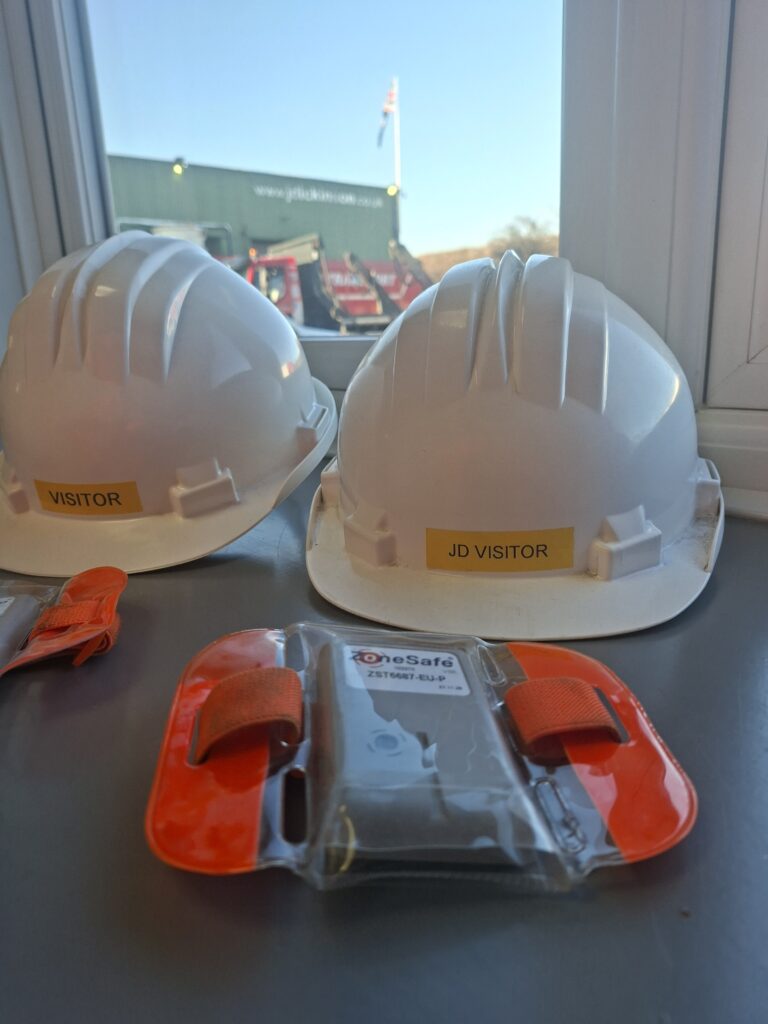
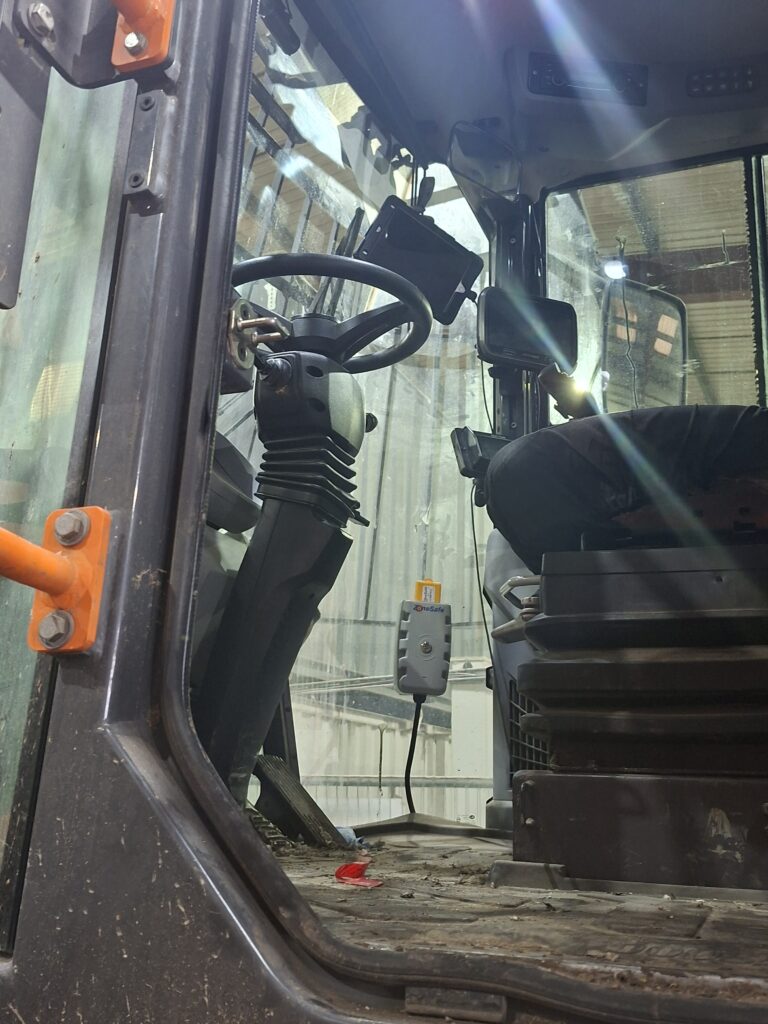
The deployment included 100 Pedestrian Tags and 16 Operator Tags. The system triggers two-way alerts. Drivers receive visual and audible alarms from an in-cab control unit, while Banksmen and yard operatives wear robust, rechargeable vibrating tags in PPE armbands that vibrate upon detection.
These detection zones are fully adjustable from 3m up to 11m, allowing the safety bubble to be calibrated to the specific speed and stopping distance of each vehicle type.
“Joe Scibilia, thanks for the invaluable advice and great service – top class 👌”
Sylvia O’Meara, Business Improvement Manager at J. Dickinson & Sons Ltd
Project Success
J. Dickinson & Sons has moved from relying on human attention to using an active safety system. This has future-proofed the Horwich site against human error by providing a solution calibrated to its unique layout.
It has been a privilege to support this evolving business, and we look forward to growing alongside them – ensuring that as their operations expand, their commitment to a safe, fear-free workspace grows right along with them.
Have you’ve been inspired by the journey of J. Dickinson and this exciting ZoneSafe collaboration project?
Speak to a ZoneSafe specialist today. Complete the form to start your journey.
See how ZoneSafe can provide a solution for you Get in touch