



Explore key risks, legal duties, and practical solutions for health and safety in waste & recycling. Protect your team and improve operations with a forward-thinking approach.
Table of Contents
-
-
-
- The Strategic Shift: Moving Beyond Compliance
- A Sector Under the Microscope: The Key Risks to Health and Safety in Waste & Recycling
- The Legal Framework: Your Duty of Care in Waste & Recycling
- From Theory to Practice: Real-World Solutions
- The Final Investment: Building a Safer Future
- References
- Questions Answered About Health and Safety in Waste & Recycling
-
-
The Strategic Shift: From Compliance to Proactive Safety
The waste and recycling industry is a vital part of our economy, but it carries a sobering reality: its accident rate remains consistently higher than in many other sectors. With complex sites, high-traffic areas, and unpredictable environments, this poses a challenge for health and safety in waste & recycling that can feel overwhelming for even the most experienced managers. So, why do these incidents continue to happen despite our best efforts?
The answer is found not in simply meeting the bare minimum of compliance, but in a commitment to building a culture of genuine safety. This is where true health and safety in waste & recycling is found: in a resilient culture that protects your people, improves morale, and safeguards your business by fostering a sense of ownership and equipping everyone to confidently mitigate risk.
This guide will provide a practical, action-oriented approach to a complex topic. By focusing on key hazards, legal duties, and cutting-edge solutions, we will show you how to build a truly resilient safety culture and a safer, more secure future for your business.
A Sector Under the Microscope: The Key Risks to Health and Safety in Waste & Recycling
Every waste and recycling site presents a unique set of challenges. The landscape is a dynamic and ever-changing environment where piles of materials shift, creating new blind spots daily. Pathways are often narrow and shared by large vehicles and on-foot staff, making traditional methods of pedestrian segregation difficult to implement. The constant presence of dust, noise, and low light further compromises visibility, creating a level of risk that simply cannot be addressed by human senses alone.
While many dangers exist, one risk stands out as a consistent and critical threat to the industry: vehicle-to-pedestrian collisions. According to the Health and Safety Executive (HSE), a staggering 53% of all fatalities in the waste and recycling sector are caused by workers being struck by a moving vehicle.
The sheer size of heavy vehicles, combined with their many blind spots and the complex layouts of these sites, creates a perfect storm for accidents. For example:
- Forklifts: Their loads, cab design, and shape create multiple blind spots.
- Shovel Loaders: The large buckets and attachments create significant blind spots for the driver.
- Excavators: The rotating body and boom arm both contribute to massive blind spots for the operator.
The Legal Framework: Your Duty of Care in Waste & Recycling
Understanding the risks is the first step; the next is to understand your legal obligation to mitigate them. The foundation of all health and safety in waste & recycling is your duty to protect your employees and anyone else who may be affected by your business operations.
This duty is rooted in the Health and Safety at Work etc. Act 1974. It establishes that employers are responsible for ensuring, so far as is “reasonably practicable,” the health, safety, and welfare of their employees. As discussed, this isn’t an option; it’s a legal standard that encourages you to actively weigh risks against the cost of a solution, with the bias always in favour of human safety.
The Health and Safety Executive (HSE) serves as a key guide, providing both standards and practical advice. In the next section, we will see how these legal duties are translated into a reality through on-site solutions and real-world results.
From Theory to Practice: Real-World Solutions
Understanding your duty of care is an essential first step. But in an industry as complex as yours, that knowledge only matters when it’s put into action. For leaders committed to building a truly safe environment, the focus is on finding tangible solutions that genuinely protect their team. Here are a few examples of how proactive businesses are turning their commitment into real-world results.
Thamesdown Recycling
For a site as active as Kingshill Recycling Centre, the mix of heavy vehicles, blind corners, and staff on foot was a constant concern. Thamesdown needed a solution that could create a clear “safety zone” around vehicles, and they found it in a proximity warning system. The result? Drivers and pedestrians are now instantly alerted to potential danger, giving everyone a tangible sense of security on a bustling site.
Read the full case study here.
Recresco Glass Recycling
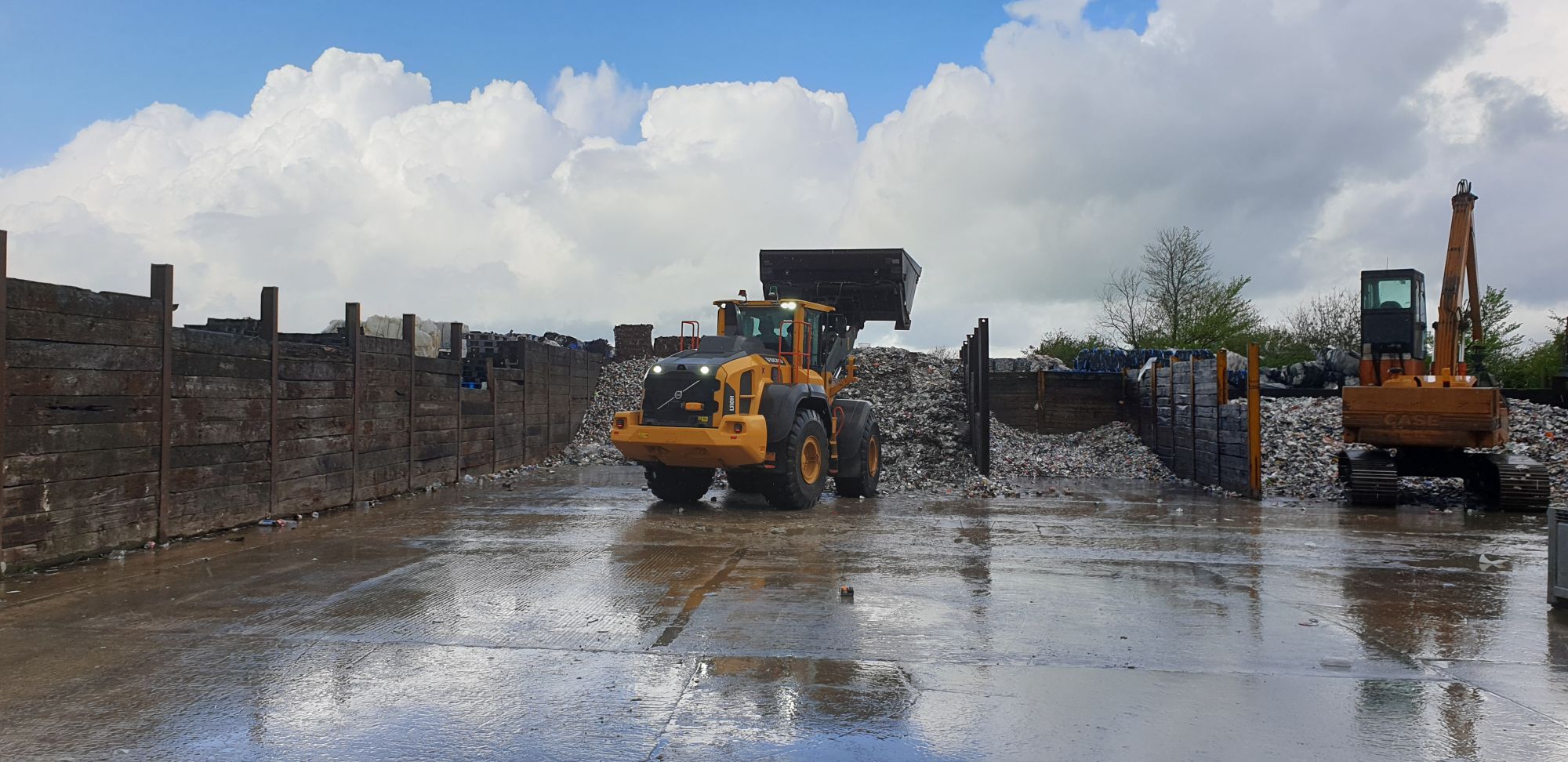
Recresco, a specialist in glass recycling, faced a very specific challenge: ensuring vehicles and people could safely share a tight, high-visibility environment. They understood that human error is inevitable, so they adopted a multi-layered approach to safety, with a proximity system serving as the final, critical line of defence. This solution works without a line of sight, giving them a 100% improvement in on-site safety and a great response from their team.
Read the full case study here.
For companies managing multiple sites and large, diverse fleets, consistency is a major challenge. A safety solution that works perfectly on one site might be unfeasible on another due to different layouts, vehicle types, or workflows. This is where a scalable, technology-driven solution becomes invaluable. Our system provides a single, consistent layer of protection that can be deployed across every site and every vehicle, regardless of type. This ensures a consistent, auditable safety standard across your entire business.
To learn more about how our dedicated detection systems for waste and recycling can help your business, click here.
The Final Investment: Building a Safer Future
This guide has taken you through a journey of understanding: from the sobering statistics that define your sector to the legal duties that hold you accountable. We’ve seen how real businesses are using proactive solutions to address their most pressing safety challenges and protect their teams.
Now, we come to the final, critical step. The investment in health and safety in waste & recycling is about more than just managing a risk; it’s a strategic choice for your people and your business. It’s about building a tangible sense of security for your team. When employees know they are protected by a system that accounts for human error and blind spots, it instills a new level of confidence. Wearing a personal tag becomes a symbol of the company’s commitment to their well-being. This kind of proactive safety culture helps build a more resilient, more productive, and more secure operation.
If you are ready to take this proactive step and transform the conversation about safety on your site, we invite you to explore how a dedicated detection system for waste and recycling can help you create a safer, more resilient environment for your team.
References
- Health and Safety at Work etc. Act 1974
- Health and Safety Executive (HSE) – Fatal Injuries in the Waste & Recycling Sector
(This guide was created with the assistance of an AI, with all factual data, expertise, and final editing provided by a human.)


